SPIN

100 credits a spin. Land the crown segment for the 1,000 jackpot.
A carnival wheel where you can count every outcome.
A free demo with play-money credits - 100 credits a spin, no deposits, no prizes. The wheel has 10 segments and pays out whatever it lands on. The values are not hidden: two 50s, two 100s, two 200s, one 500, one 1,000 crown jackpot, and two MISS wedges. Land the crown for the 1,000 and the coins rain.
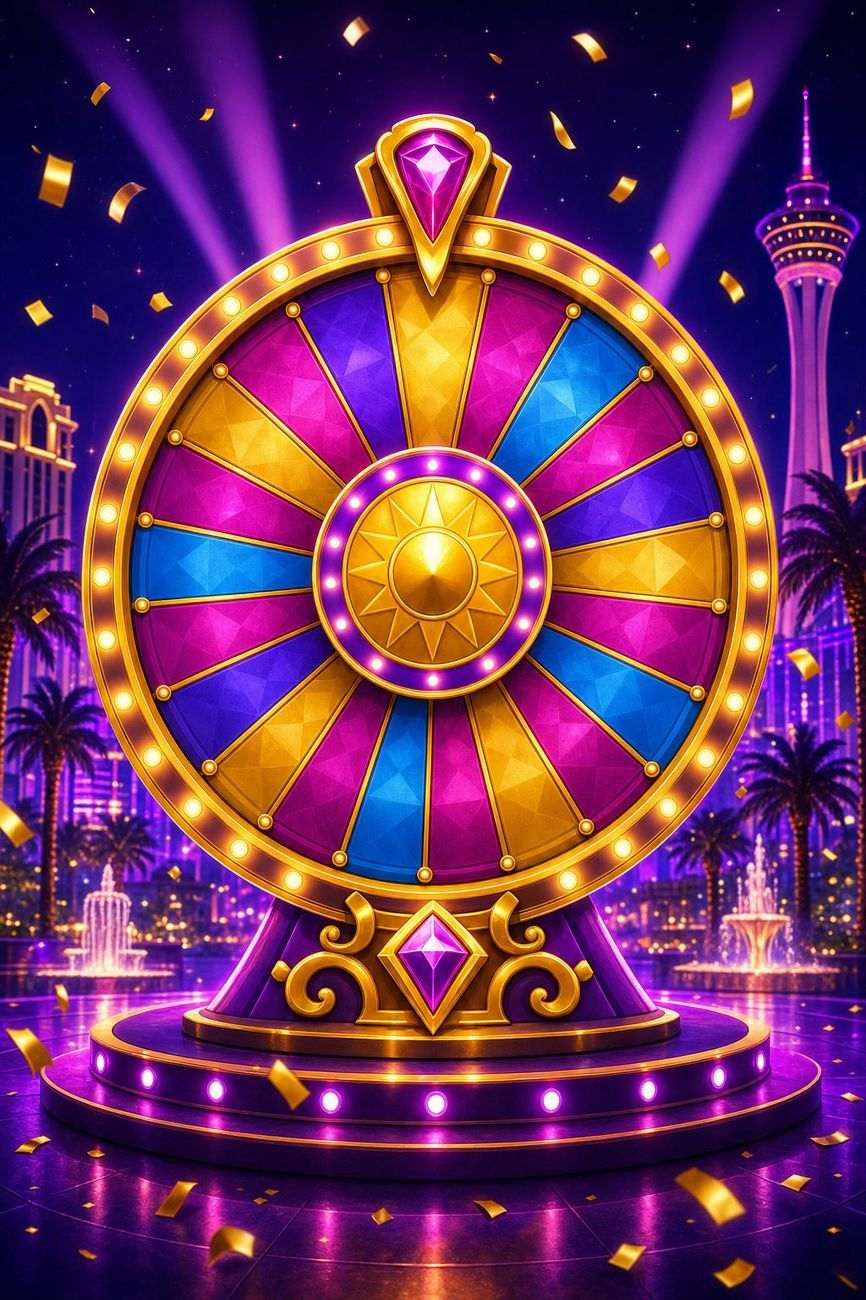
With 10 segments the true odds are countable on your fingers: the crown is 1 in 10 (10%), a MISS is 2 in 10 (20%), and the small values are your most common landings.
One crowned wedge pays 1,000 on a 100 spin - a 10x hit. Rare by design: a 10% chance per spin, no matter how many near-misses came before it.
The pointer wobble and the glow make the crown feel "due" after a few misses. It is not. Each spin is independent - the wheel has no memory of the last one.
Add the segments up and the average spin returns less than the 100 it costs - that gap is the built-in house edge, visible here in a way slots hide.
A slot hides its math inside weighted reels you cannot see. A wheel shows you everything: count the segments and you know the exact odds. That is the whole lesson here - "10% chance of the crown" is not a vibe, it is one wedge out of ten. Carry that habit to any real game and you will read a paytable the way a card player reads a hand: as numbers, not as luck.
Playing is deliberately simple, because the point is the odds, not the controls. You start with a bank of play-money credits, each spin costs 100 of them, and you press spin to send the wheel turning. When it slows, the pointer settles on one of the ten segments and you are paid whatever that wedge shows - two 50s, two 100s, two 200s, a single 500, the crowned 1,000 jackpot, or one of the two MISS wedges that pay nothing. There is no skill input once the wheel is moving: every result is decided the instant you spin, and no timing, nudging or "stopping" it changes the outcome. This is a free social demo with no deposits, no cashouts and no real-money prizes; the credits exist only so you can watch a fixed-outcome wheel behave over many spins.
Because every value and its frequency is printed on the wheel, you can work out the return yourself, which is exactly why a wheel is the honest way to learn the idea. Add up what each of the ten equally likely segments pays, divide by ten, and compare that average to the 100 a spin costs - the shortfall is the house edge, the built-in gap between what a game pays back and what it takes in. The wheel is medium volatility: most spins hand you a small or middling value, misses arrive regularly, and the 1,000 crown lands on average once every ten spins but clusters unpredictably in the short run. A run of misses does not make the crown "due" - each spin is independent, and the wheel has no memory of the last one.
The useful truth about a game like this is that there is no strategy that changes the math, and spotting that is the lesson. Flat spins and hoping for the crown produce the same long-run return as any pattern you invent, because the odds reset every spin. What you can practise here is discipline: decide how many credits a session is worth before you start, watch how fast a losing streak eats a bank, and notice how the lights and the near-miss wobble tempt you to chase. Carry that habit to real games, where the odds are hidden inside weighted reels, and you will read a paytable as numbers rather than as luck. For where those real ceilings actually sit, the high roller slots guide is the next step.
Nothing on this page can be won or lost for real money - it is entertainment and a teaching tool. When you do move to real play elsewhere, it is 18+, the same maths applies, and the stakes of every mistake rise with the bet size. Set limits before you start and treat any bankroll as money already spent; our responsible gambling page covers the tools and free UK support if play ever stops feeling like a choice.